
Bound by Celebration
Peering behind the curtain of the great Indian festivals

Originally published by Insight, co-authored with Dr. Agrima Thakur. Link to read.
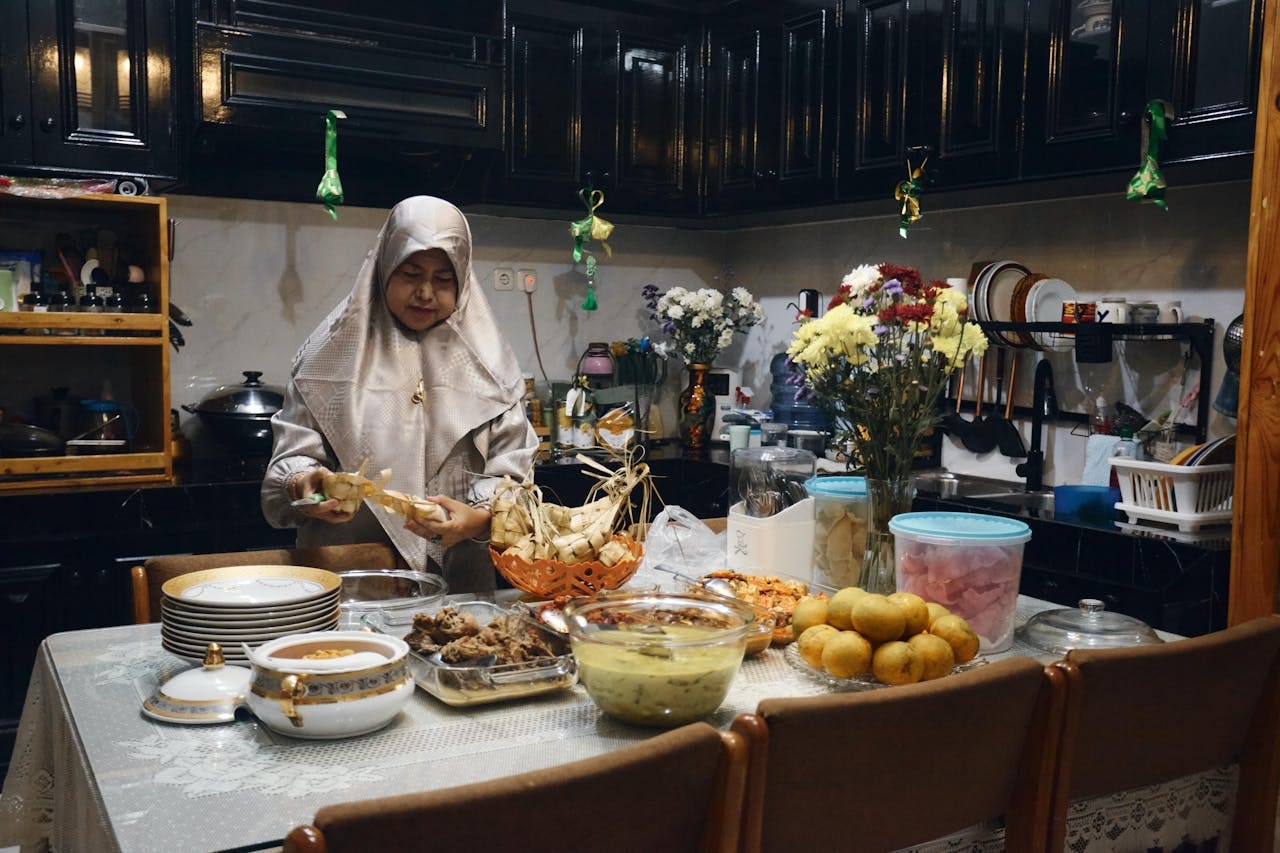
There is a lingering nostalgia attached to Indian festivals. It smells like hot ghee over puran poli on Holi, and sounds like the rhythmic crackle of chaklis frying for Diwali faraal. Its texture feels like the delicate strands of the Eid sewiyan, and perhaps it looks like the colourful table spread out for friends and family on Easter Sunday.
We’d best describe this nostalgia as the feeling of fullness, when you cannot have any more food, yet you know there’s a sweet treat which your mother/grandmother/wife has cooked, awaiting you at the gates of post-food heaven.
For generations, this sensory magic was the cornerstone of our culture, the glue that held families and faith together. But as we grow older and peer behind the curtain of these grand celebrations, a stark realisation is evident: the magic of the Indian festival was almost entirely fueled by the relentless, unpaid, and invisible labour of women.
Ever thought about what would happen to our festivals if the kitchen, and by connection, women’s contribution to them, is removed from the equation?
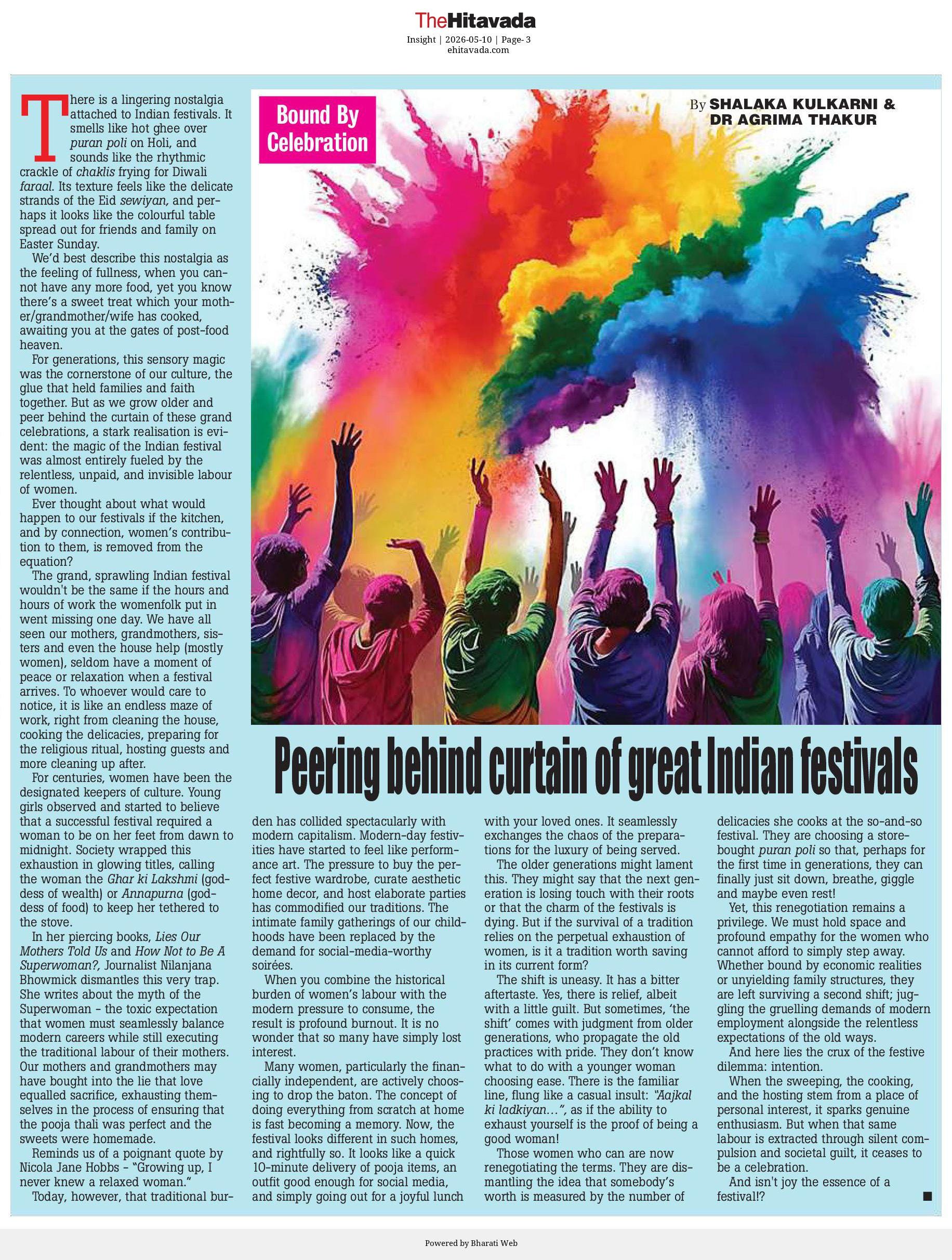
The grand, sprawling Indian festival wouldn’t be the same if the hours and hours of work the womenfolk put in went missing one day. We have all seen our mothers, grandmothers, sisters and even the house help (mostly women), seldom have a moment of peace or relaxation when a festival arrives. To whoever would care to notice, it is like an endless maze of work, right from cleaning the house, cooking the delicacies, preparing for the religious ritual, hosting guests and more cleaning up after.
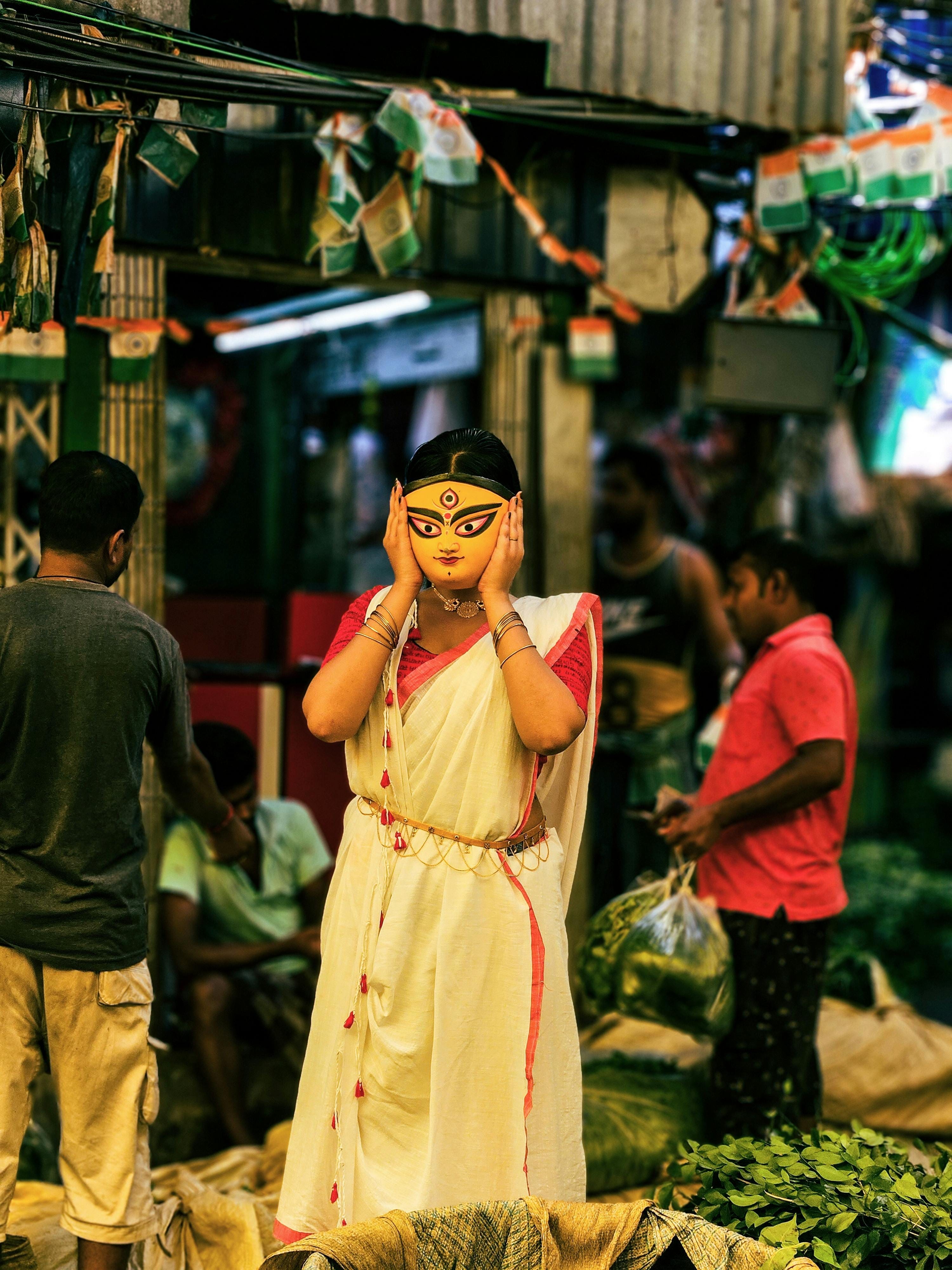
For centuries, women have been the designated keepers of culture. Young girls observed and started to believe that a successful festival required a woman to be on her feet from dawn to midnight. Society wrapped this exhaustion in glowing titles, calling the woman the Ghar ki Lakshmi (goddess of wealth) or Annapurna (goddess of food) to keep her tethered to the stove.
In her piercing books, ‘Lies Our Mothers Told Us’ and ‘How Not to Be a Superwoman?’, Journalist Nilanjana Bhowmick dismantles this very trap. She writes about the myth of the Superwoman - the toxic expectation that women must seamlessly balance modern careers while still executing the traditional labour of their mothers. Our mothers and grandmothers may have bought into the lie that love equalled sacrifice, exhausting themselves in the process of ensuring that the pooja thali was perfect and the sweets were homemade.
Reminds us of a poignant quote by Nicola Jane Hobbs - “Growing up, I never knew a relaxed woman.”
Today, however, that traditional burden has collided spectacularly with modern capitalism. Modern-day festivities have started to feel like performance art. The pressure to buy the perfect festive wardrobe, curate aesthetic home decor, and host elaborate parties has commodified our traditions. The intimate family gatherings of our childhoods have been replaced by the demand for social-media-worthy soirées.
When you combine the historical burden of women’s labour with the modern pressure to consume, the result is profound burnout. It is no wonder that so many have simply lost interest.
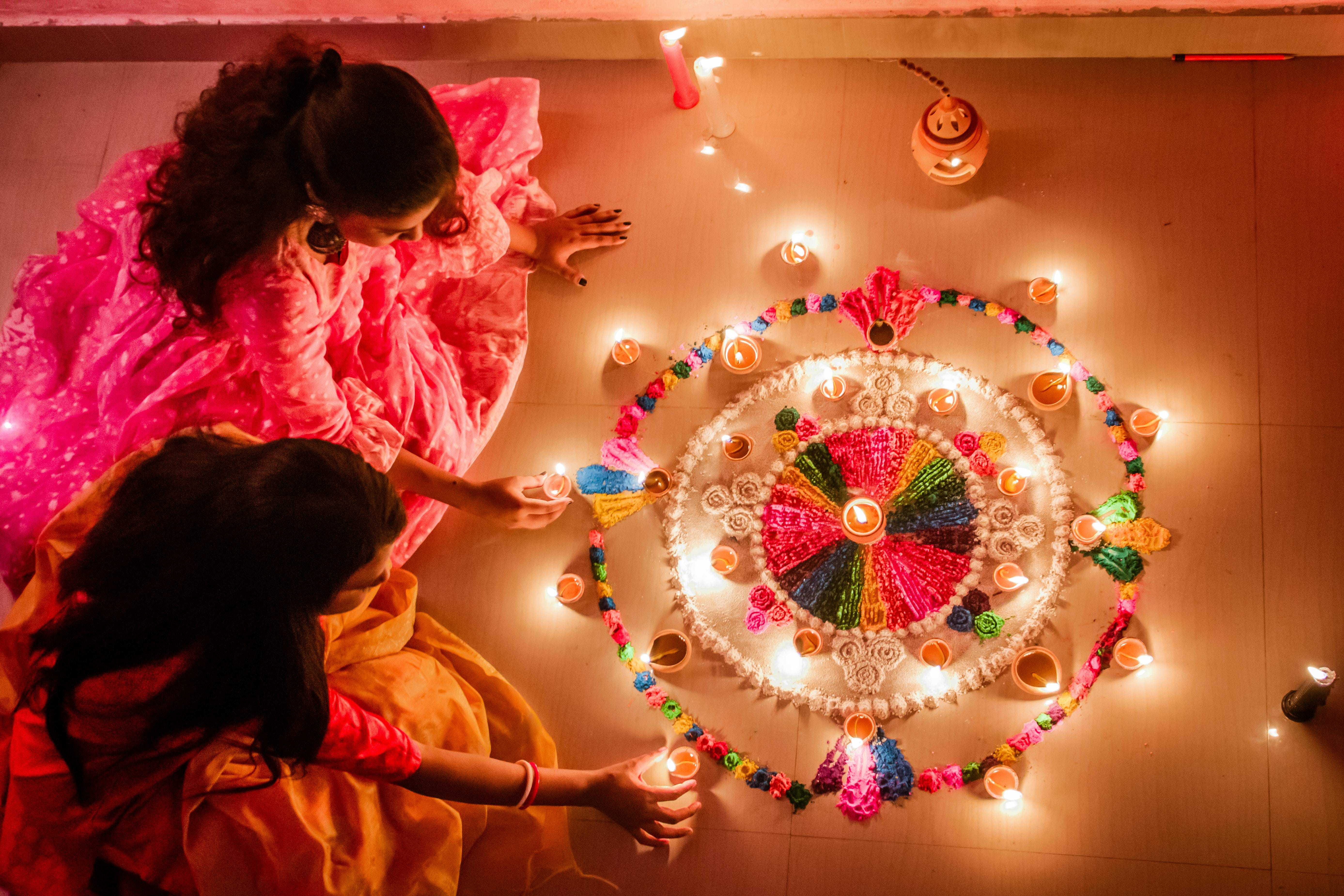
Many women, particularly the financially independent, are actively choosing to drop the baton. The concept of doing everything from scratch at home is fast becoming a memory. Now, the festival looks different in such homes, and rightfully so. It looks like a quick 10-minute delivery of pooja items, an outfit good enough for social media, and simply going out for a joyful lunch with your loved ones. It seamlessly exchanges the chaos of the preparations for the luxury of being served.
The older generations might lament this. They might say that the next generation is losing touch with their roots or that the charm of the festivals is dying. But if the survival of a tradition relies on the perpetual exhaustion of women, is it a tradition worth saving in its current form?
The shift is uneasy. It has a bitter aftertaste. Yes, there is relief, albeit with a little guilt. But sometimes, ‘the shift’ comes with judgment from older generations, who propagate the old practices with pride. They don’t know what to do with a younger woman choosing ease. There is the familiar line, flung like a casual insult: “Aajkal ki ladkiyan…”, as if the ability to exhaust yourself is the proof of being a good woman!
Those women who can are now renegotiating the terms. They are dismantling the idea that somebody’s worth is measured by the number of delicacies she cooks at the so-and-so festival. They are choosing a store-bought puran poli so that, perhaps for the first time in generations, they can finally just sit down, breathe, giggle and maybe even rest!
Yet, this renegotiation remains a privilege. We must hold space and profound empathy for the women who cannot afford to simply step away. Whether bound by economic realities or unyielding family structures, they are left surviving a second shift; juggling the gruelling demands of modern employment alongside the relentless expectations of the old ways.
And here lies the crux of the festive dilemma: intention.
When the sweeping, the cooking, and the hosting stem from a place of personal interest, it sparks genuine enthusiasm. But when that same labour is extracted through silent compulsion and societal guilt, it ceases to be a celebration.
And isn’t joy the essence of a festival!?
Here’s to living in sentences, yours, mine and ours.
Writeously yours,